As a senior designer or art director, one of the most critical skills isn’t just creating great work—it’s clearly communicating why clients should choose you. That’s where your value proposition comes in.
A value proposition explains, in simple terms, how your product or service solves a client’s problem or improves their situation. Sounds simple, right? In reality, crafting a strong, compelling value proposition is hard. It needs to be clear, unique, and memorable.
The majority of businesses fail to communicate what truly sets them apart—often not because they aren’t good, but because they haven’t defined their value proposition. If you want more clients and better business results, understanding this is essential.
Why a Value Proposition Matters
Competition is intense—especially online. Most digital businesses in Spain, for example, earn between €0 and €300,000 annually through eCommerce. Small businesses and young entrepreneurs are everywhere, and if you don’t stand out, clients won’t choose you.
Your value proposition isn’t your product or service itself. Features alone don’t differentiate you; in digital markets, anything new can be copied or slightly adapted by competitors. Instead, your value proposition is the solution you offer to your client’s problems, the benefits you deliver, and why they should pick you over anyone else.
What Is a Value Proposition?
A value proposition is a credible set of reasons for someone to pay attention to you and take action. It should be:
- Creative
- Clear
- Simple
Before defining it, you need to understand two key concepts:
Expected Value Proposition (EVP): What the client hopes or expects to get.
Offered Value Proposition (OVP): What your business actually delivers.
The closer your OVP matches your client’s EVP, the more satisfied they will be. If your OVP misses the mark, clients won’t engage or buy.
Example: A customer wants a cold soda. If your brand delivers a warm one, they’ll choose another brand.
Client expectations evolve, so what works today may not work in a few years. Think of trends like environmental awareness—biodegradable packaging can give your product a clear advantage.
3 Key Steps to Define Your Value Proposition
1. Know Your Strengths
List what makes your services unique. What do you do better than anyone else? Reflect on past client feedback, team input, and your own experience. Prioritize the benefits most relevant to your target audience.
2. Understand Your Competition
Know what alternatives your clients have. This helps you define what sets you apart and gives you a competitive edge.
3. Know Your Ideal Client
Study their needs, motivations, and preferences. Think beyond functional benefits—consider emotional, aesthetic, and experiential factors.
Use the Value Proposition Canvas
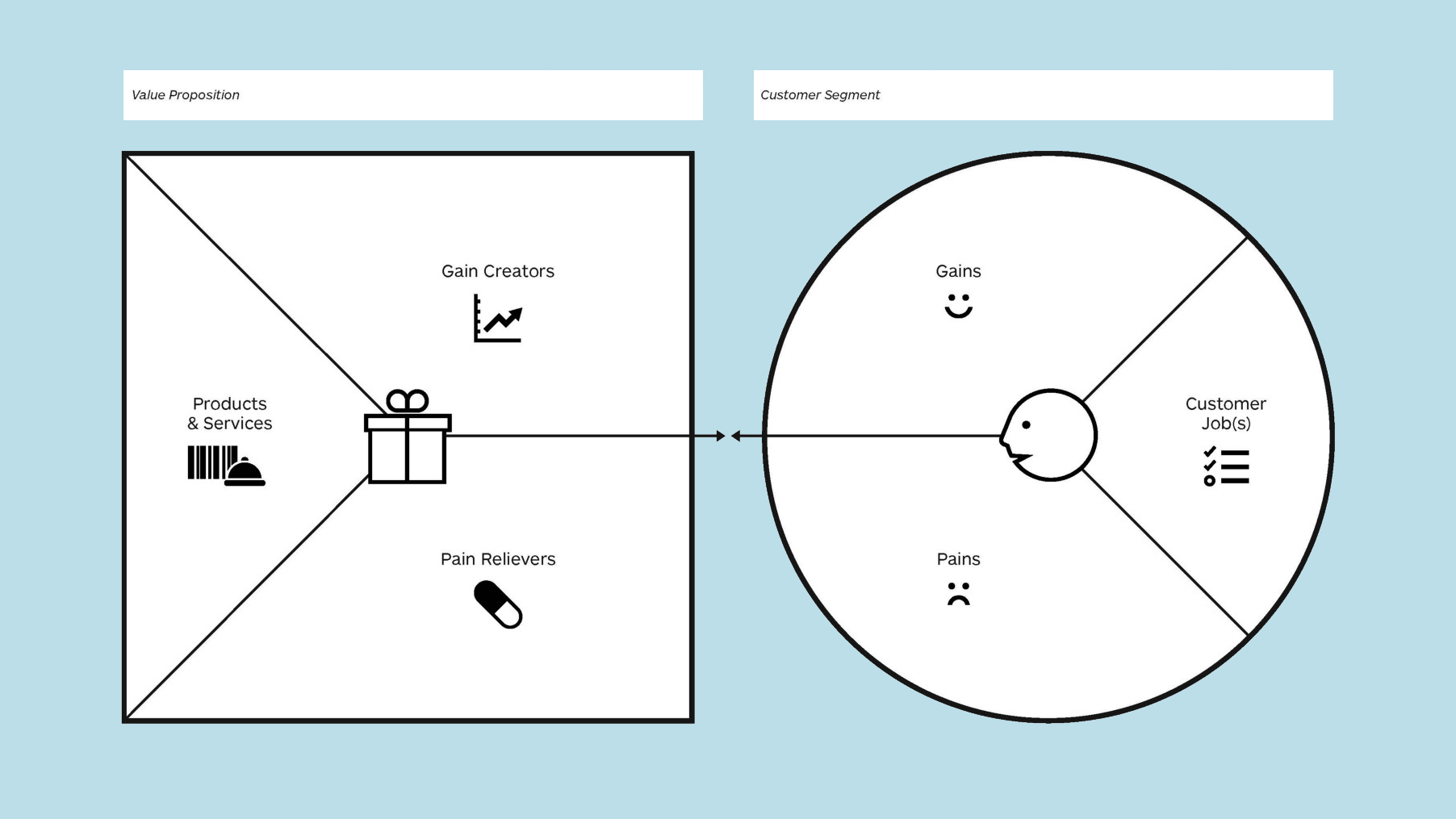
A Value Proposition Canvas helps you map out:
- Client Tasks: Daily activities and responsibilities.
- Frustrations: Obstacles and pain points they face.
- Gains: Outcomes that make them happy or make their life easier.
Then align your services with these insights:
- Products & Services: What you offer.
- Frustration Relievers: How your services solve problems.
- Gain Creators: How your work enhances client satisfaction or happiness.
This ensures your OVP resonates with client expectations (EVP) and gives you a competitive edge.
Cost vs. Benefit
Clients evaluate your offering based on perceived benefit versus perceived cost:
Motivation = Perceived Benefit – Perceived Cost
Your strategy should focus on maximizing perceived benefits while keeping perceived costs manageable. Emotional appeal matters here—clients buy with both heart and head.
Emotions Matter
The stronger your emotional connection, the more likely clients will choose you over competitors. Consider:
Emotional Benefits: “How does using my service make me feel?”
Client Insecurities: “Will this work for me? Can I trust this service?”
Use design elements, testimonials, prior work, and even typography or color to build trust and credibility.
Structuring Your Value Proposition
A simple formula works well:
Title: Capture attention and communicate the core benefit.
Subtitle: 2–3 sentences explaining what you offer, for whom, and why it matters.
Bullet Points: 3 key features and benefits of your service.
Visuals help. Images, icons, or diagrams can reinforce your message and make it instantly understandable.
Templates for Inspiration
1. Geoff Moore:
“For [target customer] who [statement of need], our product/service is [solution] that [key benefit].”
Example: “For marketing specialists who need to track social media ROI, our software converts engagement metrics into revenue metrics.”
2. Steve Blank:
“We help [X] do [Y] by doing [Z].”
3. Analogies / Industry Comparisons:
“Flickr for video” or “Firefox for media players.”
4. David Cowan:
Highlight the problem, explain the solution, differentiate from competitors, include credibility (feedback, testimonials).
5. VAD Formula:
Verb + Application + Differentiator
Example: “Share PowerPoint slides with audio (Slideshare).”
10 Characteristics of a Strong Value Proposition
1. Clear and easy to understand.
2. Uses client language; speaks to their perspective.
3. Readable in under 5 seconds.
4. Avoids hype and superlatives.
5. Communicates tangible results.
6. Focuses on real client problems (frustrations and gains).
7. Appeals to emotional needs, not just functional.
8. Clearly differentiates from competitors.
9. Excels in at least one key area.
10. Hard to copy.
Extra Tips to Boost Your Value
Small add-ons can make your offer irresistible:
- Free shipping
- Next-day delivery
- Free bonus with purchase
- Free installation
- No long-term commitment
- Multi-user licenses
- Money-back guarantee
- Discounts
- Personalization
Communicating Your Value
Once defined, show your value everywhere—your website, proposals, emails, and presentations. Confidence matters: clients sense hesitation. Keep your messaging consistent and aligned with your value proposition.
Repeat the exercise periodically. Markets, clients, and competitors change, but a clear, unique, and compelling value proposition keeps you relevant and sought-after.