"To do two things at once is to do neither" - Publilius Syrus
As a freelance designer or aspiring art director, you’re constantly juggling tasks, clients, deadlines, and distractions. Productivity is one of today’s biggest challenges: we live in a multitasking, highly competitive environment where new demands pop up every day, threatening to pull us away from what really matters.
Even perfectionists can fall into procrastination. One day you’re full of creative energy, completing everything, and the next you postpone tasks, get distracted, and feel frustrated. If this sounds familiar, these strategies will help you organize your time and improve your performance consistently.
Daily Planning in 5 Steps
Step 1: Write down all your tasks
Yes, ALL of them. Not just work-related tasks, but also personal and household chores. For example: “Take the cat to the vet” or “Pick up clothes from the dry cleaner.”
I recommend writing them by hand. Studies show that physically writing things down helps you prioritize, remember, and free up mental space. If you prefer digital tools, apps like Todoist, Trello, Asana, or Notion work great.
Don’t worry if your list exceeds 50 tasks—it’s normal, and going over 100 is fine. The goal is to unload your memory and clearly see what you need to do. Take a break, grab a coffee, and add a few more tasks if needed before moving on.
Step 2: Group tasks into projects or blocks
Divide your list into projects, using a separate page for each one. Projects can be work-related, personal, or categories like “Home” or “Health.” Ideally, you should have no more than 10 projects to stay in control.
If you see subtasks, that’s great. Big projects are easier to tackle when broken into smaller, actionable steps.
Step 3: Set priorities
Evaluate each project based on deadlines, benefits, and personal importance. Some tasks may be enjoyable but not profitable, while others are essential but less pleasant, like paying taxes or sending urgent proposals. Recognizing this helps you manage your energy and focus.
Step 4: Make a daily task list
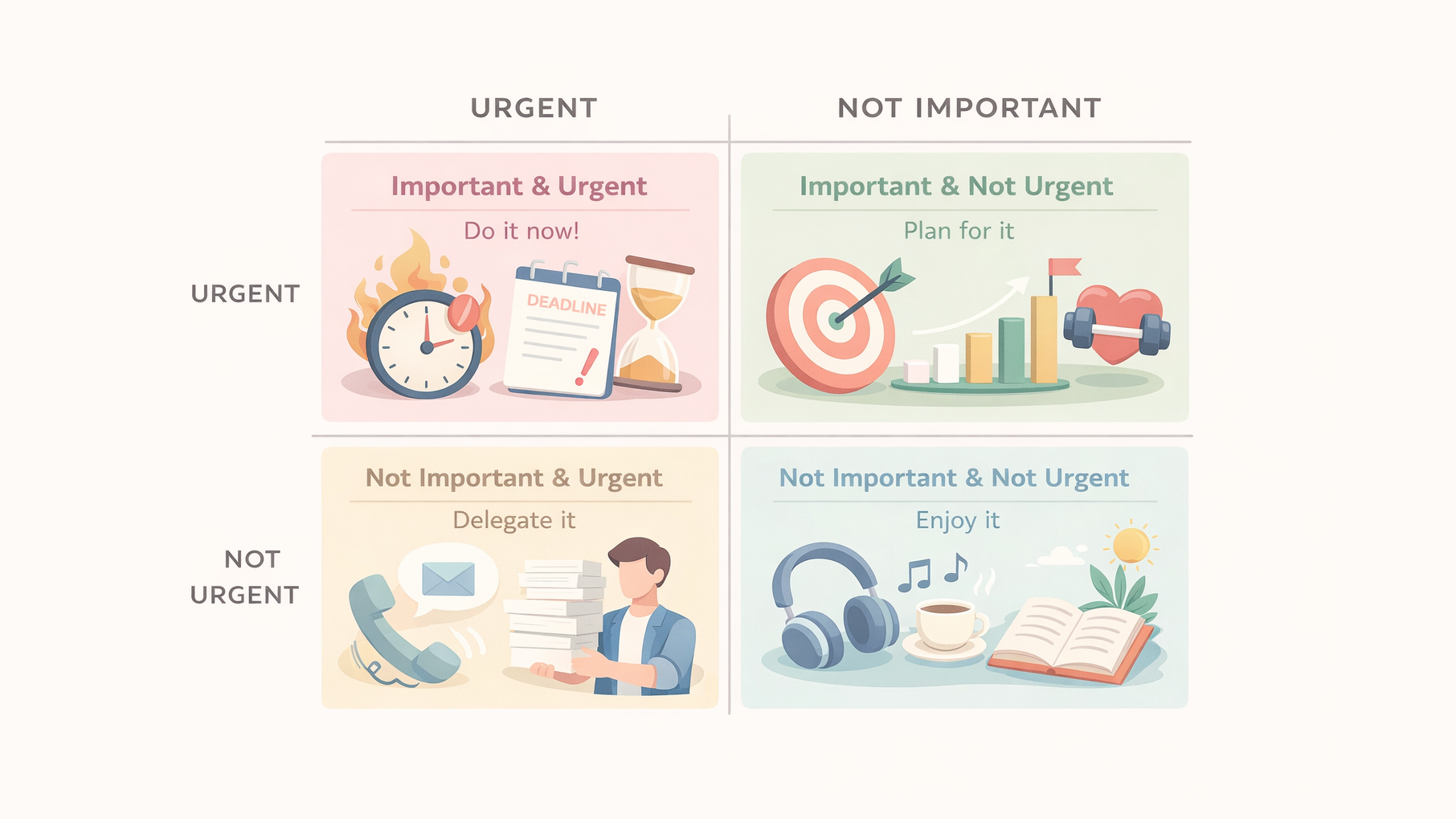
Use the Eisenhower Matrix to prioritize:
-
Important & Urgent: Emergencies and immediate deadlines. Minimize these by planning ahead.
-
Important & Not Urgent: This is the most valuable quadrant: tasks that impact your long-term goals, career growth, health, or relationships. Schedule time for these before they become urgent.
-
Not Important & Urgent: Tasks that need attention today but don’t require your expertise. Delegation is key.
-
Not Important & Not Urgent: Activities that recharge your energy or inspire you, like reading or listening to music. They’re not a priority but are valuable for your well-being.
Step 5: Set deadlines
A plan without deadlines won’t work. Divide tasks by estimated duration:
-
5 min: quick calls, check emails
-
20 min: write a short email, prepare tomorrow’s task list
-
1+ hour: meetings, reports, or strategic tasks
Group small tasks and include short breaks between blocks. If something important isn’t completed, move it to the next day.
Tips to make the most of your time
1. Plan no more than 6 hours
Don’t overplan. Too many tasks can create frustration and impossible goals.
2. Break down large projects
Projects that take more than a day should be broken into subtasks. Our brains prefer manageable steps, even for “elephant-sized” projects.
3. Stop procrastinating
Procrastination often comes from overwhelming tasks or distractions. Turn your phone to airplane mode and focus. If it persists, check your stress, fatigue, or motivation levels.
4. Use the Pomodoro Technique
Work for 25 minutes, then rest for 5. Short breaks help maintain focus. Remember to rest outside work hours: overworking for long stretches reduces productivity.
5. Find your peak productivity hours
Everyone has hours when they work best. For most designers, mornings are ideal for complex or creative tasks.
6. Avoid multitasking
Studies show multitasking can increase task time by 20–40%. Work sequentially for better efficiency.
7. Learn from mistakes
At the end of the day, review what wasn’t done. Don’t get frustrated—adjust timing, identify distractions, and plan better next time.
8. Reward yourself
Celebrate even small wins. Complete a task block? Have a coffee or play your favorite song. Small rewards help keep motivation and performance high.
Conclusion
Time management isn’t just about lists or methods. It’s a mindset for designers who want to stay productive, creative, and happy. Plan, prioritize, and protect your energy: your productivity and well-being grow together.